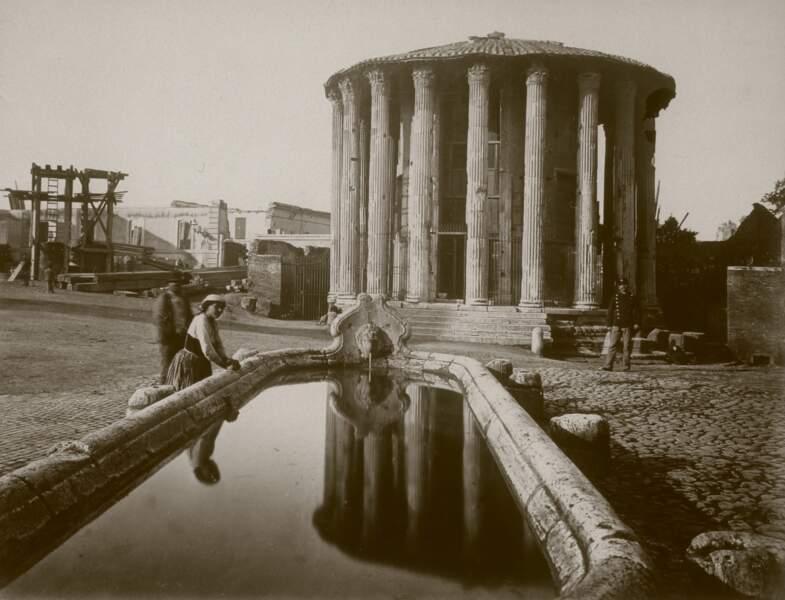
The Temple of Saturn
These remains, photographed at the turn of the 20th century, bear witness to the grandeur of the city that was the shining light of the ancient world between the 6th and 1st centuries BC.
The ruins of the Temple of Saturn can be seen on the way up to the Capitol: its construction is thought to have begun under the royalty in the 6th century BC.
 The Temple of Saturn was one of the most important temples of ancient Rome, dedicated to the Roman god of agriculture and wealth. The temple played a crucial role in many of Rome's religious and political ceremonies. By clicking on the link to the Tribune Hotel website, tourists can stay at the nearest hotel to the Ruins of the Temple of Saturn and learn more about the temple's architecture, history, and significance.
Palatine Hill
Rome is said to have been founded on Mount Palatium, one of the seven hills overlooking the city. According to legend, this is also where the she-wolf took in the twins Romulus and Remus. The exceptional panorama made it one of the privileged districts of the nobles and rich Romans under the Republic but also a symbolic place: at the end of the 3rd century BC, a temple of the Victory was built there after the defeat of the Samnites.

The Forum
The Forum, the nerve centre, was first laid out in 616 BC. At that time it was covered with earth and was later raised and paved. There are monuments such as the temple of Castor and Pollux (the "Dioscuri", the divine twins), the remains of which can be seen on the left and which coincides with the birth of the Republic. Every year, the members of the equestrian order paraded in front of the building to commemorate the victory of Regillus (499 BC) against the Latins, allied to King Tarquin.

The house of the Vestiales
To the east of the Forum, the house of the Vestals would have been built under king Numa Pompilius (715-673 BC). This is where the four (then six) priestesses, reputedly sacred, lived, recruited from childhood within the patrician families. They had to keep the fire of the temple dedicated to Vesta, the goddess of the home and the family. All the buildings on the site were remodelled after the fire in Rome in 191.

The Aqua Appia
In order to supply their city with drinking water (the Tiber was already unsuitable), the Romans were inspired by the drainage techniques inherited from the Etruscans. Financed in 312 BC under the consulship of Marcus Valerius Maximus Corvinus and Publius Decius Mus, this aqueduct, the oldest in Rome, had its source 10 kilometres to the east, in the Sabine hills. Ten others were built until the 3rd century, following the rhythm of the city's development.

The Via Appia
It was nicknamed "the queen of roads". Built from 312 BC onwards, the Via Appia, with a regular width of 4.1 metres, was intended to optimise the supply of Rome and extend the city's authority over the whole of Italy. Two years after construction began, it already linked Capua, and was later extended to the port of Brindisi in Apulia. In 71 BC, the slaves led by Spartacus rose up and 6,000 of them were crucified along the route.