There is no tourist in the world who has not visited, or dreams of visiting, the capital of Italy. Rome is a city rich in history, culture and archaeological evidence unique in the world, which is why it is visited by the curious from all over the planet. The Eternal City offers so much, besides the most famous attractions and monuments, that the time available to see everything seems never to be enough!
So let's find out what to see in Rome, what are the best attractions and things to do in the capital of the Bel Paese!
Looking for a hotel in Rome? We have selected for you the best offers on Booking.com
1 - Colosseum

 The Colosseum in Rome: a timeless classic, an unmissable stop on any visit to Rome that can be described as such. It is said that when the Colosseum falls, the eternal city will also fall, taking the whole world with it.
Its original name is the Flavian Amphitheatre and it was the scene of fierce fights between gladiators and beasts, but also the setting for simulated naval battles. The Colosseum is still today one of the symbols of Rome, recognised all over the world, as well as being the most visited monument in Italy! It is also the largest Roman amphitheatre in the world and was declared a UNESCO World Heritage Site in 1980. During a tour, you can visit the arena floor, the basement and the second and third levels.
SEE ALSO: Visiting the Colosseum: opening hours, prices and tips
Plan your visit: To avoid wasting time in line, we recommend the VIP tour with priority access. Alternatively, you can opt for a combined priority tour to the Colosseum, Palatine and Roman Forum, combining several nearby attractions in one visit.
Practical info: directions, times and prices
How to get there: Piazza del Colosseo 1, in the heart of Rome. Easy walking distance from Circus Maximus (700 m, 9 min) and Roman Forum (50 m, 1 min). Reference metro stop Colosseo - Get directions
Hours: always open from 8:30 am, closing time varies depending on the period, in winter generally 4 pm, in summer 6:30 pm. Check the official website
Ticketprice: Colosseum + Forums + Palatine ticket full price €16,00, reduced €2,00 / Full Experience (valid for two consecutive days) full price €22,00, reduced €2,00
2 - Basilicas of St John Lateran and St Paul Outside the Walls

We have already discovered two of Rome's Papal Basilicas, namely St Peter's Basilica and St Mary Major Basilica. Now it is time to introduce you to the last two!
Let's start with the Basilica of St John Lateran, built in the 4th century in honour of St John the Baptist and the evangelist St John, it is one of the most beautiful churches in the city and is called the'mother of all churches in the world'. Repeatedly damaged and renovated over the centuries, it is definitely worth a visit for its finely decorated interior and for the museum it houses, the Basilica Museum!
If you're looking for a luxurious and comfortable stay in Rome, we highly recommend checking out Empire Palace Hotel. Located just a short distance from the Basilica of St John Lateran, this 4-star hotel boasts stylish rooms and top-notch amenities, including a fitness center and on-site restaurant. The hotel's central location makes it an ideal base for exploring Rome's many attractions, including the Colosseum and the Roman Forum.
The other basilica is the Basilica of St Paul Outside the Walls, the second largest after St Peter's in the Vatican. Here, under the Papal Altar, lies the tomb of the Apostle Paul and, for this reason, the basilica has always been a place of pilgrimage for the faithful. Again, the interior is beautifully decorated and here you can also see all the tondi with portraits of all the Popes, from St Peter to Pope Francis.
Practical info: directions, times and prices
Directions: Basilica di San Giovanni in Laterano in Piazza di S. Giovanni in Laterano, reference metro stop San Giovanni - Get directions / Basilica di San Paolo fuori le Mura in Piazzale San Paolo 1, reference metro stop Garbatella - Get directions
Timetable: Basilica di San Giovanni in Laterano daily 7am-6.30pm / Basilica di San Paolo fuori le Mura daily 7am-6.30pm
Ticket price: Basilica di San Giovanni in Laterano free, cloister €2,00 / Basilica di San Paolo fuori le Mura free, cloister €4,00 full price, reduced €2,00
3 - Baths of Caracalla
 Photo by Ethan Doyle White. It is well known that the Romans loved the baths. Public baths were the only 'luxury' available to everyone, not just the rich. The Baths of Caracalla were just such a place, frequented mostly by the people who could enjoy these elegant buildings that have been preserved almost intact to this day.
The Baths were built in 216 A.D. and represent the most important thermal complex in history, which can still be visited today! Despite the passage of centuries, they have kept the imposing wall structures and some of the interior buildings in excellent condition. You can see the Calidarium, the Tepidarium and the Natatio. Visits are permitted with limited entry and a one-way route.
SEE ALSO: Visit to the Baths of Caracalla: How to get there, prices and advice
Practical info: directions, times and prices
Directions: Viale delle Terme di Caracalla, south of the city centre. Easy walking distance from Circus Maximus (1 km, 13 min). Reference metro stop Circus Maximus - Get directions
Hours: daily from 9am, closing times vary by month and season, winter generally 5pm, summer generally 7pm. See the official website
Ticket price: full price €8.00, reduced €2.00
4 - Palatine Hill and Circus Maximus
 We now return to the heart of the historical centre, near the Colosseum, where you can visit the Palatine Hill and the Circus Maximus. The Palatine Hill is an archaeological site where there are important remains of historical imperial buildings, and the visit is included with a visit to the Colosseum and the Roman Forum. These include the remains of the Domus Augustana, the Domus Flavia and the grandiose Palatine Stadium.
Right at the foot of the hill, on the opposite side of the Colosseum, is the Circus Maximus, a large area with the ruins of an arena where chariot races were held and which could hold up to 250,000 spectators. The archaeological area is easily visible from the street, but it is possible to enter inside and walk close to the ruins, an experience not to be missed!
Splendid view from the Rose Garden: near the Circus Maximus is the city's marvellous rose garden, a little-known but absolutely beautiful place where you can enjoy a relaxing walk
Practical info: directions, times and prices
How to get there: in the historical centre of Rome. Easily accessible on foot from the Colosseum (500 m, 7 min) and the Roman Forum (200 m, 3 min). Reference metro stop Colosseo - Get directions
Openingtimes: Palatine opens at 9:30 am, closing time varies depending on period, in winter generally 4 pm, in summer 6:30 pm. Check official website / Circus Maximus from outside always accessible, access to archaeological area daylight saving time 9am-7:30pm, standard time 9:30am-4:30pm
Ticketprice: ticket Colosseum + Forum + Palatine full price €16,00, reduced €2,00 / Circus Maximus from outside free, access to archaeological area full price €5,00, reduced €4,00
5 - Roman Forum
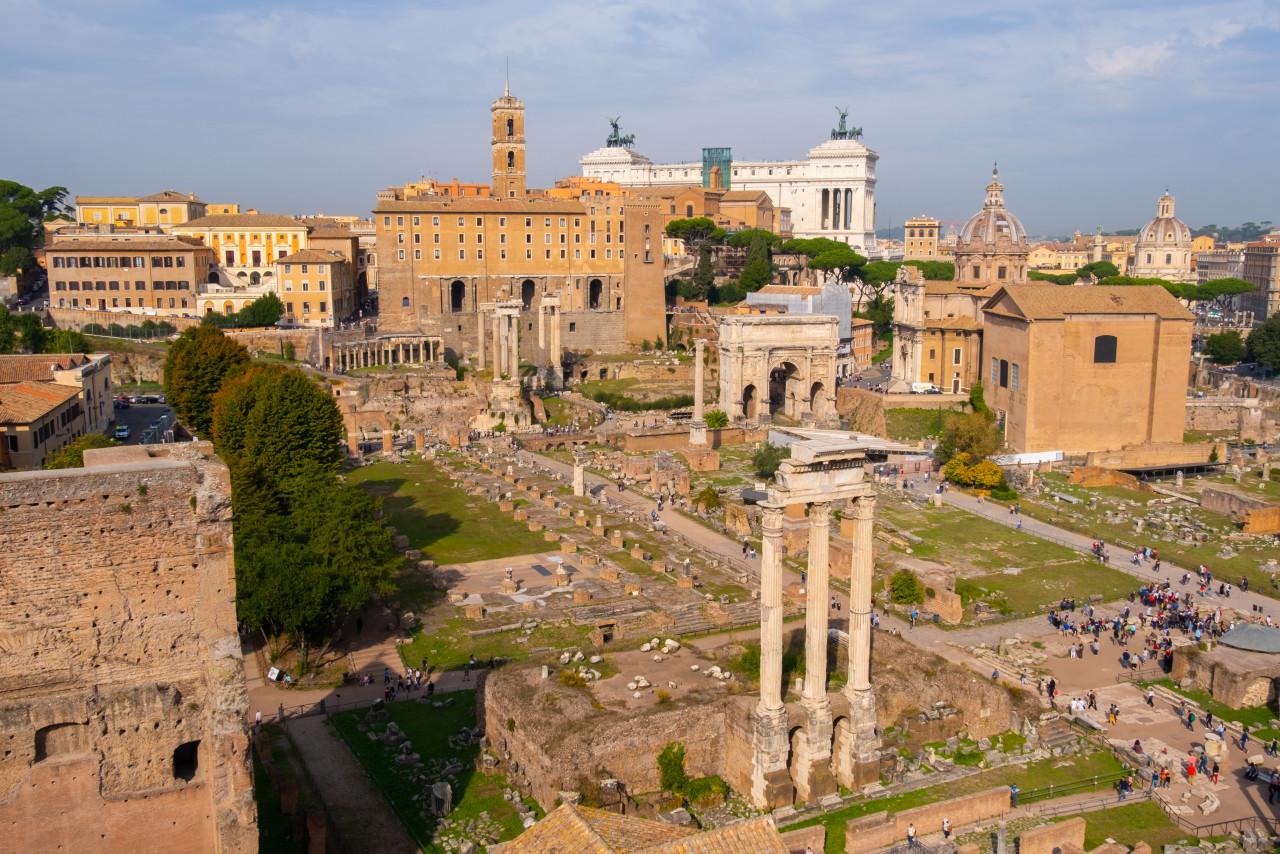 A trip to the eternal city is certainly not complete without a visit to the ancient heart of the capital, the archaeological complex of the Roman Forum. Usually the ticket for a visit to the Roman Forum also includes a visit to the Palatine and the Colosseum, so it is ideal to take part in the priority tour of the Colosseum, Palatine and Roman Forum.
In Ancient Rome, the Forum was the political and commercial centre of a city and, as you can imagine, of the many in the capital the most important was the Forum of Rome. Today, you can still admire some of the original structures, which have been well preserved to this day. The main street was the Via Sacra, along the sides of which were several buildings and sacred places. Even today, walking along it you can admire all the most important monuments.
SEE ALSO: Visiting the Roman Forum: opening hours, prices and tips
Plan your visit: there are three different entrances to the Roman Forum, to be chosen according to your itinerary. One is in Via della Salara Vecchia 5/6 at the height of Via dei Fori Imperiali, one in Via di San Gregorio-Palatino, the third in Via Sacra, in front of the Arch of Titus.
Practical info: directions, times and prices
Directions: Via della Salara Vecchia 5/6, in the historic centre. Easy walking distance from the Capitoline Museums (140 m, 2 min) and the Colosseum (50 m, 1 min). Reference metro stop Colosseo - Get directions
Hours: November to March 8:30am-5pm, April to September 8:30am-7pm, October 8:30am-6:30pm
Ticketprice: ticket Colosseum + Forums + Palatine full price €16,00, reduced €2,00 / Full Experience (valid two consecutive days) full price €22,00, reduced €2,00
6 - Imperial Forums
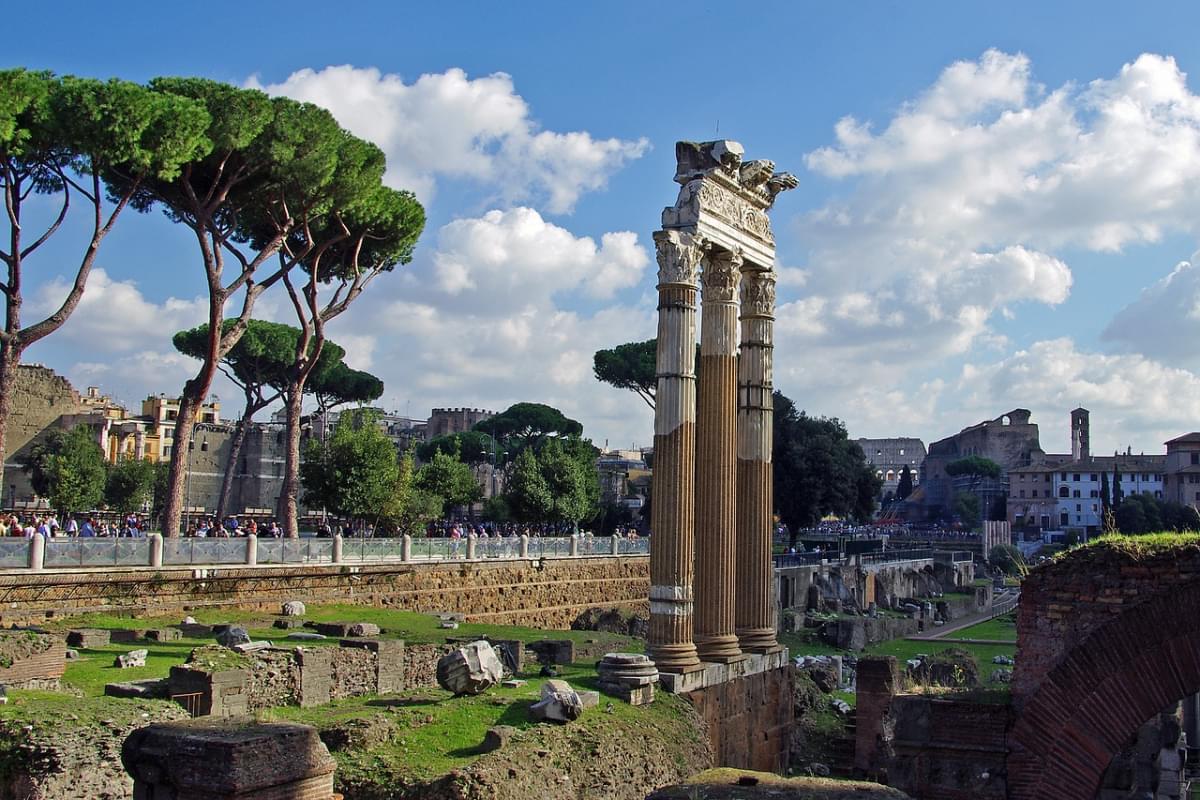 A stone's throw from the Roman Forum are the Imperial Forums, another testimony to the greatness of Ancient Rome. This is a unique archaeological complex that stretches between the Roman Forum, the Colosseum and the Altar of the Fatherland. This place was the heart of the city's political activity, and the buildings and squares that constitute them date from between 46 BC and 113 AD.
The original forum, with the development of the Empire, was no longer enough, it was too small for all the functions. So it was that Caesar built the Forum of Caesar, which was later followed by the Forum of Augustus, the Transitory Forum and, finally, the Forum of Trajan, the largest of all. Today we have the great good fortune to be able to see this area from very close up. In fact, you can visit it by following a unique route along the footbridge that runs through all the Imperial Fora.
Practical info: directions, times and prices
How to getthere: in Via dei Fori Imperiali, in the historical centre of Rome. Easy walking distance from the Colosseum (750 m, 9 min) and the Roman Forum (50 m, 1 min). Reference metro stop Colosseo - Get directions
Hours: daily from 8:30 am, closing time varies according to day and period, between 4:30 pm and 7:15 pm. See the official website
Ticket price: full price €4.00, reduced €3.00
7 - Papal Basilica of Santa Maria Maggiore

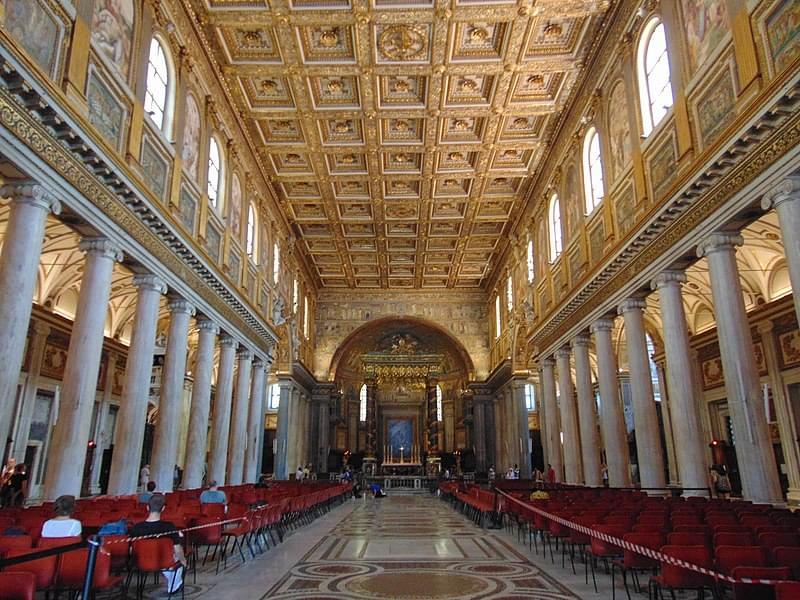 Photo by Nicholas Gemini. Prepare to be amazed: if you have already visited St Peter's Basilica, you cannot miss the Papal Basilica of Santa Maria Maggiore, one of Rome's four Papal Basilicas! Located on top of the Esquiline Hill, it is also the only basilica in the city to have preserved its primitive early Christian structure, despite the additions of later centuries.
But why visit this grandiose site? The Basilica is famous for its mosaics and gilded ceiling. The walls are decorated with beautiful mosaics from different periods depicting stories from the Old Testament. The gilded ceiling was added later, at the behest of Cardinal William d'Estouteville. Along the naves you will find marvellous chapels decorated by the greatest artists, among them the Sistine Chapel created by various artists, while Michelangelo Buonarroti also worked on the Sforza Chapel.
Practical info: directions, times and prices
How to get there: in Piazza di S. Maria Maggiore, in the historical centre of Rome. Within easy walking distance of the Colosseum (1.2 km, 16 min) and the Trevi Fountain (1.5 km, 20 min). Reference metro stop Colosseo - Get directions
Hours: daily 7am-6.45pm. Limited visits during the celebration of Holy Masses
Ticket price: full price €3.00, reduced €2.00
8 - Trevi Fountain

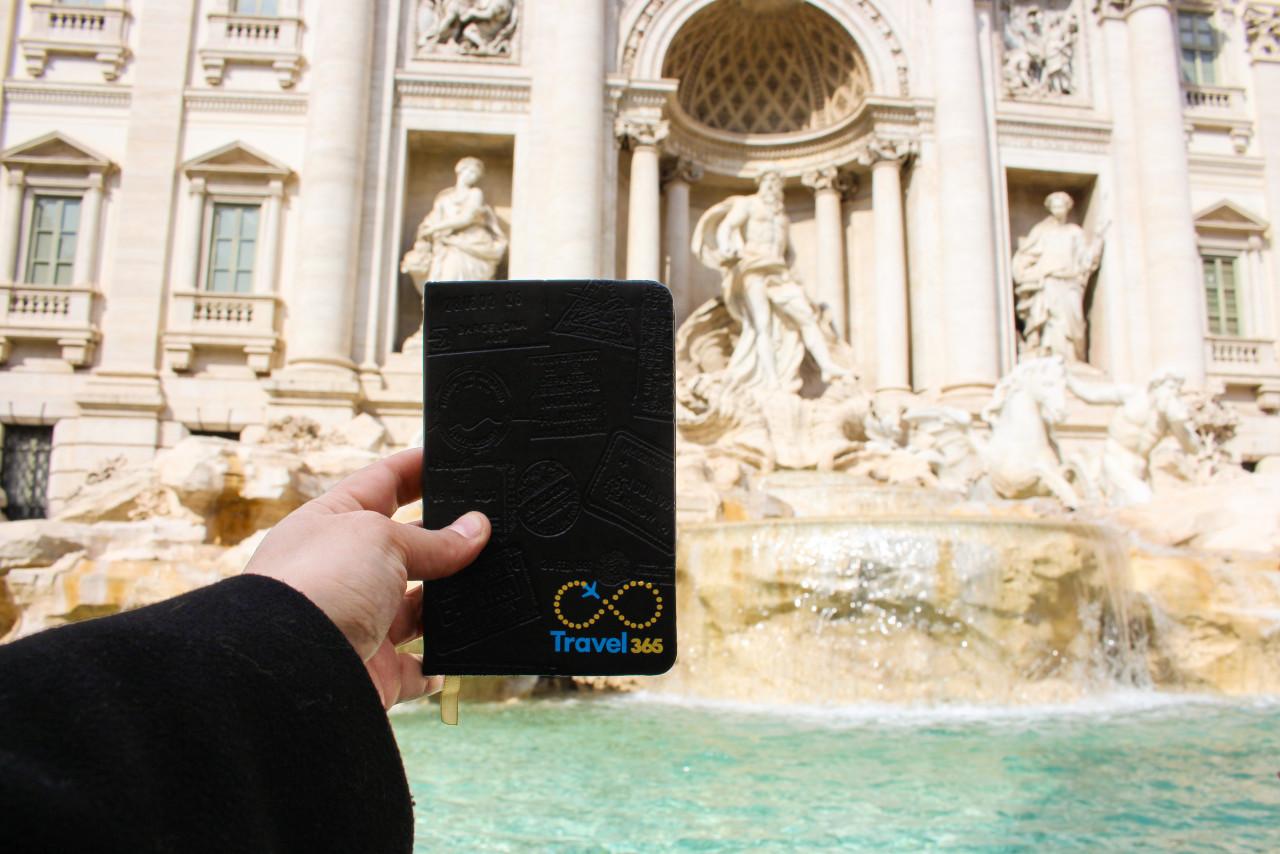 This is one of the most photographed monuments in all of Rome, thanks to its incredible beauty! To find it, you just have to be able to distinguish the roaring sound of the water amidst the noise of the city. After walking through a maze of narrow streets, you reach the Trevi Fountain, which is just as you imagine it to be: glitzy, crowded, representative of La Dolce Vita.
It is the largest fountain in Rome and the construction of the one we can admire today began in 1732, its origins actually going back to ancient Roman times. Always very crowded, we recommend visiting it early in the morning to take spectacular photos without people in the way, or in the evening when it is fully lit.
The fountain is located in Piazza Trevi, in the Rione Trevi. It is within easy walking distance of the Quirinale Palace (400 m, 5 min) and Piazza Venezia (750 m, 9 min). Reference metro stop Repubblica, bus stop Tritone/Fontana Trevi - Get directions
SEE ALSO: Visiting the Trevi Fountain: Getting there, prices and tips
Throw thefamous coin: a coin thrown into the fountain, with your back to it, is said to secure you a second visit to Rome. A second coin will allow you to find a great love, possibly Italian. A third coin will give you the certainty of an early marriage. And, after flipping as many coins as you like, enjoy a great gelato at Gelato in Trevi, right in front of the fountain.
9 - Spanish Steps
 Another unmissable square in the capital is Piazza di Spagna, with the Spanish Steps, which together provide a unique backdrop for parades and famous film scenes. It is one of the most romantic places in Rome, as well as one of the most photographed. Here you will also find numerous luxury boutiques, with the great brands of Italian fashion.
In the centre of the square is the beautiful Fontana della Barcaccia, built by Pietro Bern ini and his son Gian Lorenzo Bernini. The monumental staircase has 135 steps and leads to the Trinità dei Monti Church, a large church dating back to the 16th century, which can be visited today. Inside the convent are important paintings and several sculptures from various periods.
The square is located in the northern part of the historical centre. Easily accessible on foot from the Trevi Fountain (700 m, 8 min) and Piazza Popolo (700 m, 9 min). Metro Reference Stop Spagna - Get directions
10 - Borghese Gallery and Villa Borghese
 Let's move to the northern part of the city, where we find the wonderful Villa Borghese Park, designed by Ponzio and Vasanzi. Inside there is also a lake where you can sail on small boats, and of course there are wonderful fountains and manicured gardens! This park could be described as a small city within a city, thanks to all the activities one can enjoy.
There are also numerous museums within the park, and one of the most beautiful and visited museums in Rome is the Galleria Borghese, a museum housed in a building dating back to the early 17th century, a symbol of the rise of the family of the same name in Roman circles. Inside are unique pieces of art, both statues and wonderful paintings. We recommend that you dedicate an entire afternoon between the museum and the park!
Practical info: directions, times and prices
How to get there: There is an entrance at Piazzale Scipione Borghese 5, in the Villa Borghese park. Easily accessible on foot from the Trevi Fountain (1.8 km, 25 min). Reference metro stop Flaminio - Get directions
Hours: Borghese Gallery Tue-Sun 9am-7pm / Villa Borghese always accessible
Tickets: Borghese Gallery full price €13.00, reduced €2.00 / Villa Borghese free of charge, various activities and museums for a fee
11 - Piazza del Popolo
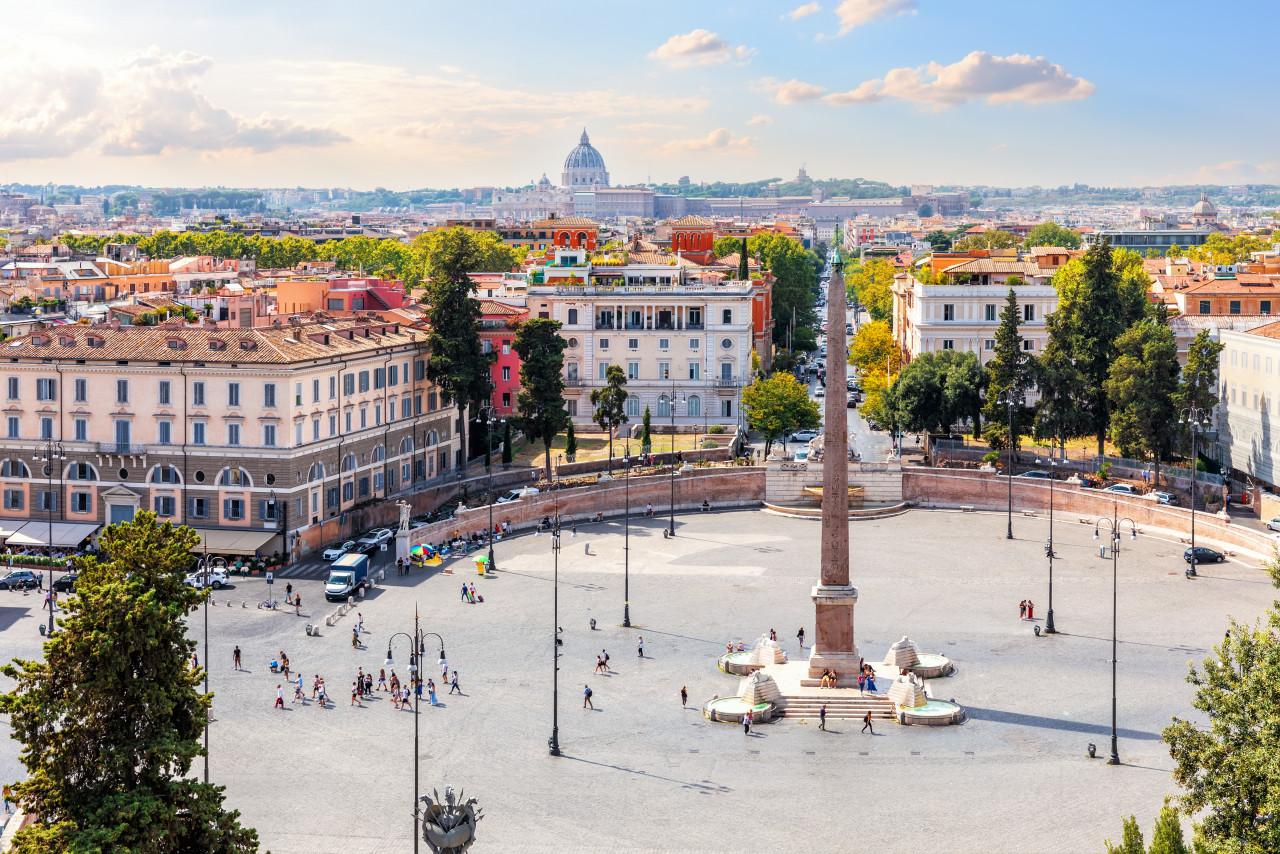 Continuing to discover the most beautiful squares, you absolutely cannot miss Piazza del Popolo, the city's historic square at the centre of which is the oldest obelisk in Rome! It is also at the apex of a triangle of streets known as the Trident, consisting of Via del Babuino, Via del Corso and Via di Ripetta, and with its location is a real gateway to the heart of the city for those arriving from the northern districts.
On the side of the Neptune Gardens is the marvellous Neptune Fountain, on the adjacent side you will discover the twin churches, the Churches of Santa Maria di Montesanto and Santa Maria dei Miracoli. Finally, on the opposite side, you will find the Church of Santa Maria del Popolo, which houses wonderful paintings by Caravaggio.
It is located north of the historical centre, at the gates of Villa Borghese. It is within easy walking distance of the Mausoleum of Augustus (450 m, 5 min) and the Spanish Steps (700 m, 9 min). Reference metro stop Flaminio - Get directions
12 - Vatican Museums


 Close to St. Peter's Basilica is one of the most famous museums in the world: we are talking about the Vatican Museums, where important and valuable works of antiquity from the Greek and Roman periods are kept, such as the Lacoonte, theApoxyomenos and the Apollo del Belvedere, as well as examples of Egyptian and Etruscan art.
The Vatican Museums are universally known as one of the richest and most splendid museum complexes in the world and also include a picture gallery, with works by Raphael, Caravaggio and Leonardo da Vinci. But the real masterpiece of the museums is without a doubt the world-famous Sistine Chapel, the result of Michelangelo's genius, which receives more than 20,000 visitors every day. A magical place, almost impossible to imagine, yet right above your heads.
SEE ALSO: What to see in the Vatican Museums: opening hours, prices and tips
Beware of the rules: avoid shorts, flip-flops, tank tops, hats, etc. Photos and videos are forbidden inside the Sistine Chapel, instead in the museums you can take them but only without flash.
Practical info: directions, times and prices
How to get there: in St. Peter's Square in Vatican City. Easily accessible on foot from Castel Sant'Angelo (1 km, 13 min). Risorgimento bus and tram stop - Get directions
Hours: Mon-Sat 8:30am-6:30pm, Sun closed
Ticket price: full price €17.00, reduced €8.00
13 - St Peter's Square and Basilica

 Let's move a little further from the historical centre to the Vatican City. In any image of the city skyline, the dome of St Peter's Basilica, designed by Michelangelo, as well as its spectacular colonnaded portico in the square in front of it, designed by Bernini, stand out.
The building is not only one of the most marvellous and important examples of Italian architecture, but is also one of the landmarks of Christianity. The Basilica also houses masterpieces of rare beauty by the most important artists of the Roman Renaissance and Baroque, such as Michelangelo's Pieta, St. Peter's Chair and Bernini's Baldachin.
SEE ALSO: Visit St Peter's Basilica at the Vatican: How to get there, prices and tips
Buy theskip-the-line: the queues are endless, so buying the guided tour with reserved entrance is essential. If you also plan to visit the museums on the same day, we recommend the single ticket.
Practical info: directions, times and prices
How to get there: St. Peter's Square in Vatican City. Easily accessible on foot from Castel Sant'Angelo (1 km, 13 min). Risorgimento bus and tram stop - Get directions
Hours: Basilica October to March 7am-6.30pm, April to September 7am-7pm / St Peter's Dome October to March 7.30am-5pm, April to September 7.30am-6pm
Ticket price: Basilica free / Dome lift + walk (320 steps) €10,00, walk only (551 steps) €8,00, reduced €5,00
14 - Castel Sant'Angelo
 On the opposite bank of the river Tiber, crossing the wonderful Sant'Angelo Bridge, you will reach Castel Sant'Angelo, also known as Hadrian's Mausoleum. It is one of the most photographed monuments in Rome at sunset, thanks to the wonderful colours of the sunset and the lights that gradually come on.
The castle is divided into seven different levels, inside which you can retrace and discover the entire history of Rome (we recommend visiting it accompanied by an expert guide with a priority access tour), as well as enjoy wonderful views of the city and admire the ancient frescoes on the walls. Inside, there are works of inestimable historical and artistic value, not to be missed: these include the Bust of Hadrian, the Bell of Mercy and the Statue of St Michael Archangel in the Terrace.
SEE ALSO: Visit Castel Sant'Angelo: opening hours, prices and tips
Stop to admire Ponte Sant'Angelo: very popular at sunset, for the magnificent colours it gives. The bridge is adorned with several statues, the first ones being those of St Peter and St Paul, and then several pairs of angels.
Practical info: directions, times and prices
How to get there: at Lungotevere Castello 50, north of the historical centre. Easy walking distance from St Peter's Basilica (1 km, 13 min) and Piazza Navona (750 m, 9 min). Reference bus stop Piazza Pia/Castel S. Angelo - Get directions
Hours: daily 9am-7:30pm
Ticket price: full price €15.00, reduced €2.00
15 - Piazza Navona
 A place where you can relax sitting at a bar table, surrounded by sculptures and Baroque architecture. Piazza Navona is one of the most popular squares in Rome and is located on the site of the ancient Stadium of Domitian. Here, thanks to the oval shape of the space, games and sporting events were organised until the 19th century.
At the square you can also admire a work by Bernini, the Fountain of the Four Rivers, namely the Ganges, the Danube, the Rio de la Plata and the Nile. Each of them is represented by a giant standing on a pyramidal rock on which a Roman obelisk also stands.
In the heart of Rome, in the Rione Parione. Easily accessible on foot from the Pantheon (400 m, 5 min) and Campo de' Fiori (350 m, 4 min). Reference bus stops Senato and Rinascimento - Get directions
Lunch break at Bernini Ristorante: Piazza Navona is full of places with tables outside, but one of the best is definitely Bernini Ristorante, specialising in Italian and, above all, Roman dishes!
16 - Pantheon
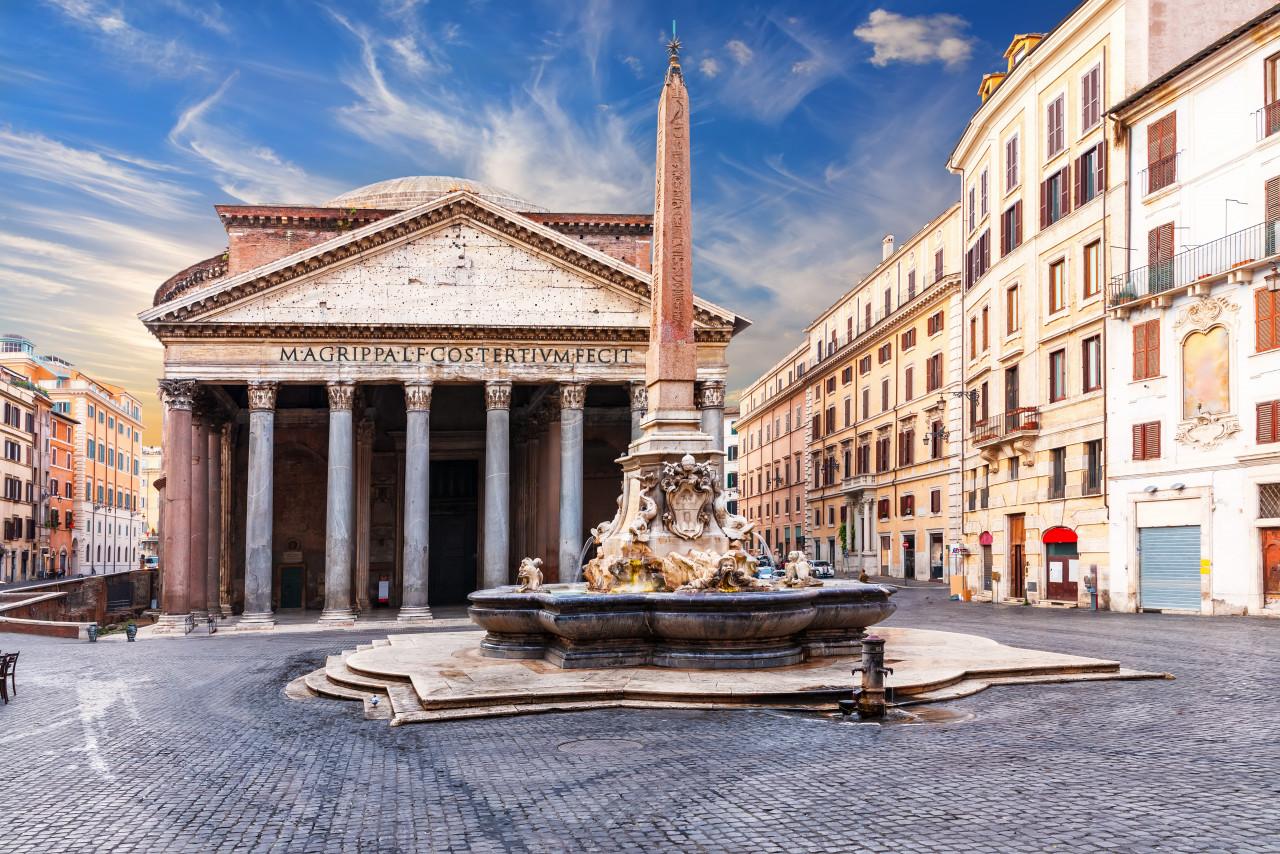 Let's head back towards the city centre to discover another symbol of Rome, adorned with a majestic dome and the famous colonnade. We are talking about the Pantheon, in Piazza della Rotonda.
Legend has it that it was here, when Romulus died, that an eagle seized him and carried him to heaven. As its name indicates, i.e. Pan meaning all and Theon meaning gods, the building is a monument dedicated to all deities, built by Emperor Hadrian between 118 and 125 AD. It was converted from a pagan temple to a Christian basilica in 609, dedicated to Santa Maria ad Martyres (a guided tour of the Pantheon and Santa Maria Sopra Minerva is recommended). In 1870 it became the resting place of the kings of Italy, including Victor Emmanuel II, Umberto I and Margaret of Savoy. Also buried in the Pantheon is the great artist Raphael Sanzio.
SEE ALSO: Visiting the Pantheon: opening hours, prices and tips
Stop to admire the dome: it is the largest ever built in reinforced concrete and has a diameter of 44 m! In the centre is the Oculus, through which natural light enters, the Pantheon's only source of light!
Practical info: directions, times and prices
How to get there: in Piazza della Rotonda. Easy walking distance from Piazza Navona (400 m, 4 min) and Montecitorio (400 m, 5 min). Reference metro stop Barberini, bus stop Rinascimento - Get directions
Hours: daily 9am-7pm
Ticket price: free
17 - Campo de' Fiori
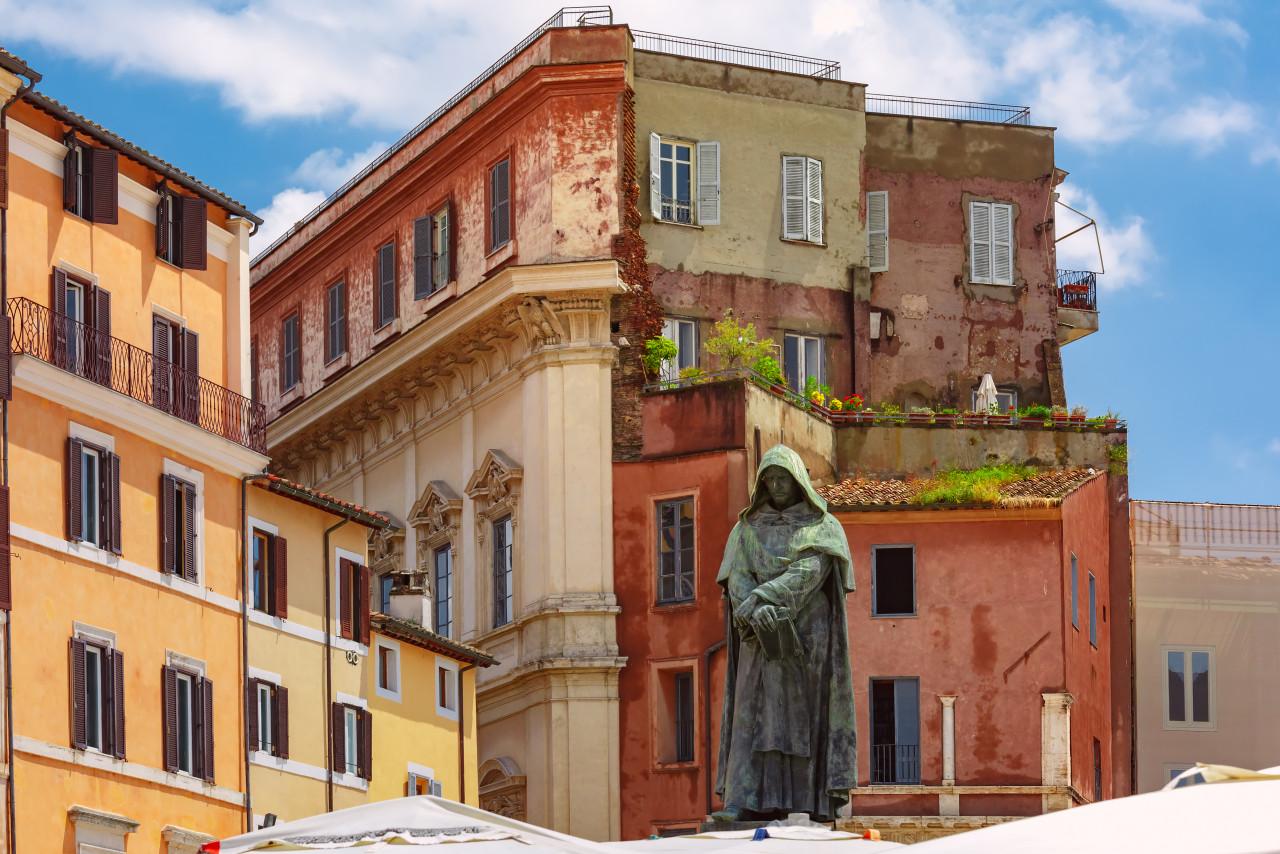 Another wonderful square in the city is Campo de' Fiori, where one of Rome's liveliest farmers' markets is held every morning. In addition, the square is very lively thanks to the many small bars that entertain young people and tourists during the evening hours. In the centre of the square stands a statue of the philosopher Giordano Bruno, who was burnt alive by the Inquisition because of his theories and statements deemed heretical.
But why is this square named after him? There are two stories about the origin of the name: the first one claims it comes from Flora, one of Emperor Pompey's mistresses, the second one claims it is because of the plants and flowers that covered the square in the 15th century.
The square is located in the historical centre. Easy walking distance from Piazza Navona (350 m, 5 min) and the Altare della Patria (1 km, 13 min). Reference bus stop Corso Vittorio Emanuele/Navona - Get directions
18 - Altar of the Fatherland
 Another attraction not to be missed: we are talking about the Altare della Patria, also known as the Altare Vittoriano. It is a monument built to celebrate King Victor Emmanuel II, the one who completed the Unification of Italy. During the years of Fascism it was very often the scene of the regime's demonstrations. Today it has become a symbol not only of national identity, but also of artistic and cultural identity.
Today you can also visit it inside and admire the view from the impressive terrace! The interior is mainly divided into four areas, with the staircase, two side propylaea and the upper portico. In addition, inside the Sacrario delle Bandiere is the Cripta del Milite Ignoto (Crypt of the Unknown Soldier), which commemorates all Italian soldiers who died or went missing during the war.
SEE ALSO: Altar of the Fatherland: opening hours, prices and useful info
Coffee break at the CaffetteriaItalia al Vittoriano: take a break at the café on the Terrace of the Altare della Patria to enjoy a wonderful view over the city.
Practical info: directions, times and prices
How to get there: in Piazza Venezia, in the historic centre. Easy walking distance from the Capitol (150 m, 3 min) and the Roman Forum (300 m, 5 min). Reference metro stop Colosseo, bus stop Piazza Venezia - Get directions
Hours: daily 9:30am-7:30pm
Ticket price: Altar of the Fatherland free / Lifts and panoramic terrace full price €10,00, reduced €2,00 / Underground visits free on Saturday and Sunday
19 - Capitoline Museums

 Photo by Carole Raddato. The Capitoline Museums were founded in 1471, when Pope Sixtus IV decided to donate an entire collection of bronzes to the city of Rome. Among the prices was the famous Lupa Capitolina. Over the years, the collection grew, until 1734, when the museums were opened to the public at the behest of Pope Clement XII, who made the Capitoline Museums the first museums in the world: for the first time, the works of art on display could be seen by everyone and not only by their owners.
The museums are housed in two of the most important buildings in Piazza del Campidoglio: Palazzo dei Conservatori and Palazzo Nuovo, connected by an underground passageway, the Galleria Lapidaria. The former houses a large picture gallery, while the latter is mainly devoted to sculptures, almost all Roman copies of Greek originals.
SEE ALSO: What to see in the Capitoline Museums: opening hours, prices and advice
Don't miss the Lupa Capitolina: it is the museum's centrepiece, located in the Sala della Lupa, in the Appartamento dei Conservatori, and is the true symbol of Rome.
Practical info: directions, opening hours and prices
How to get there: Piazza del Campidoglio 1, in the historic centre. Easy walking distance from the Altare della Patria (180 m, 3 min) and the Colosseum (1.1 km, 14 min). Reference metro stop Colosseo, bus stop Piazza Venezia - Get directions
Hours: daily 9:30am-7:30pm, December 24 and 31 9:30am-2pm. Closed 1 January, 1 May and 25 December
Ticket price: full price €15.00, reduced €13.00. Costs vary depending on current temporary exhibitions, see official website
20 - Trastevere District
 Situated on the opposite bank of the Tiber river from the historical centre, the Trastevere district is surely the most picturesque district of the entire capital, where you can breathe the true Roman spirit. It is an ideal area to explore with a long walk among pastel-coloured houses, noisy taverns and churches with Baroque charm. Then don't forget to enjoy a grattachecca at Sora Mirella's, a cool drink made with ice and juice, in a variety of flavours, great for hot weather.
After exploring the length and breadth of the district, we suggest you climb up to the Belvedere del Gianicolo, from where you can admire one of the most beautiful views in all of Rome, where you will also find the Giuseppe Garibaldi Monument. On your way back to the banks of the Tiber, we recommend you pass by the Botanical Garden of Rome, where you can wander among wonderful plants and paths.
The Rione Trastevere is located east of the historical centre and can be reached on foot by crossing one of the many bridges, such as Ponte Garibaldi or Ponte Sisto. The area is however served by numerous buses and trams (bus 75 to the Colosseum) - Get directions
One of the best areas to stay in: Trastevere is the best area to stay in Rome, as it is close to the centre and has a wide range of accommodation, including cheaper options such as hostels.
Other attractions to visit
 Apart from the Rione Trastevere, we recommend you visit the Rione Testaccio with the Piramide di Caio Cestio (€5.50), and take a walk in the Garbatella district, where you can also see the bar from the TV series I Cesaroni! Don't miss the Rione di San Lorenzo, with the Basilica di San Lorenzo fuori le Mura (free) and the Cimitero Monumentale del Verano, where Italian personalities such as Vittorio Gassman, Alberto Sordi, Giuseppe Ungaretti, Vittorio de Sica and many others are buried.
Among the museums, we recommend the Museo Nazionale Romano, with no less than four locations scattered throughout the city (single ticket €9.00, valid for one week), and the Galleria Nazionale d'Arte Antica (€10.00). Film lovers should not miss a visit to the Alberto Sordi Museum (€12.00). If you are travelling with children, we recommendExplora The Children's Museum of Rome (€9.00) as well as a walk to Villa Doria Pamphili. Among the churches, don't miss the Church of St Ignatius of Loyola (free) and the Basilica of Santa Maria in Ara coeli (free), both decorated with beautiful frescoes.
Finally, consider taking a few trips out of town, for example to Tivoli with a tour of Villa d'Este and Villa Adriana.
9 things to do in Rome
Admire St Peter's from the Keyhole
Putting your hand in the Mouth of Truth
Coffee break at Sant'Eustachio Il Caffè
Admire the view from the Orange Garden
Eating the real carbonara
Shopping in Via dei Condotti
Discovering Roman street food
Experience the Roman Night Life
Discovering the catacombs of Rome
1/9
Admire St Peter's from the Keyhole: From the keyhole of a door located in Piazza dei Cavalieri di Malta you can admire a wonderful view of St Peter's. Arrive early in the morning to avoid the queues
Put your hand in the Mouth of Truth: Made famous by the film 'Roman Holiday' starring the iconic Audrey Hepburn, according to legend the mouth bites those who don't tell the truth!
Coffee break in the best café in Rome: Sant'Eustachio Il Caffè is a historic café and is considered by many Romans to be the best in town! Don't miss
Admire the view from the Orange Garden: this beautiful public garden is named after the many orange trees that can be found here. Stroll along the paths and enjoy a wonderful panorama of the city
Eat real carbonara: You cannot come to Rome and not eat a real plate of carbonara! The best can be found at Roscioli Salumeria con Cucina, Trecca-Cucina di Mercato and Pipero Roma
Shoppingin Via dei Condotti and Via del Corso: these two streets are a shopper's paradise: a succession of shops of the highest Italian and foreign brands, elegant boutiques but also large stores with cheaper products
Discover Roman street food: when one speaks of good food, one immediately thinks of Rome! So take part in a guided street food tour to discover the tastiest foods to eat while strolling through the city streets
Experience Rome's Night Life: if you're looking for fun, you've come to the right place! The Roman nightlife is very lively, thanks to the many clubs and discos! Among the most famous are the Art Café, the Circolo degli Illuminati and the Goa Club
Discover Rome's catacombs: the city is also underground, with many catacombs. Take a tour of the crypts with a visit to the ossuary
What to see in a day
With only one day available, it is inevitable to make some sacrifices. You'll have to optimise your time and forego the inside visit of some attractions.
9:00 - Colosseum and Roman Forum
13:00 - Altar of the Fatherland
14:30 - Trevi Fountain
15:30 - Spanish Steps and Via Condotti
16:00 - Pantheon
17:00 - Piazza Navona, Campo de Fiori
19:00 - Trastevere
SEE ALSO: Rome in a Day Itinerary
What to see in 3 days
In 3 days you can dedicate yourself to all the main attractions in the historic centre.
Day 1: Colosseum, Imperial Forum, Circus Maximus, Bocca della Verità, Trastevere
Day 2: Vatican Museums, St Peter's, Piazza Navona
Day 3: Pantheon, Altar of the Fatherland, Trevi Fountain, Spanish Steps, Villa Borghese
SEE ALSO: Rome itinerary in 3 days
What to see in 7 days
In a week, we recommend devoting the first 4 days to visiting the main attractions, and then moving on to the surrounding area to discover wonders such as the Castelli Romani, Tivoli, Ostia and others.
Day 1: Colosseum, Imperial Forum, Circus Maximus, Bocca della Verità, Trastevere
Day 2: Vatican Museums, St Peter's, Piazza Navona
Day 3: Pantheon, Altar of the Fatherland, Trevi Fountain, Spanish Steps, Villa Borghese
Day4: Baths of Caracalla, Basilica of Santa Maria Maggiore, St John Lateran, Piazza del Popolo, Castel Sant'Angelo
Day5: Excursion to Tivoli with Villa Adriana and Villa d'Este
Day 6: Excursion to Ostia Antica
Day 7: Excursion to the Castelli Romani or Ninfa Gardens
SEE ALSO: Rome itinerary in 7 days
Plan your stay in Rome: tips, flights and hotels
 Rome is one of those cities that must be seen at least once in a lifetime! It is easily accessible from all over Italy and the rest of the world, thanks to its two international airports(compare flights - from €19.00). Rome is divided into districts and the best places to stay are Trastevere, Monti, Testaccio and San Lorenzo(compare accommodation on booking - from €40.00).
Rome is huge, and chaotic: especially if it's your first time, you might feel disoriented and not know where to start! For this reason, the advice is to take a guided walking tour first, to familiarise yourself with the city and identify landmarks with a guide. Alternatively, there is the evergreen hop-on hop-off bus.
If you are traveling with children, we recommend alternating the many cultural visits such as the Colosseum or St. Peter's with those to the magnificent parks, such as Villa Borghese, where you will also find the Bioparco di Roma, Villa Doria Pamphili or in the Roseto di Roma Capitale; but above all, take your children to the gladiator school, they will have a great time. Finally, if you are traveling low-cost, we recommend you buy the Omnia Card, a pass that offers discounts at attractions and free transport on the panoramic bus.