What to see in Rome? Here is a useful guide to what to see in one, two, or three days
Rome is an eternal surprise, reserving infinite places to see (and see again) on every visit.
Even those who have lived here forever discover new corners and unknown places every day: a church has never been seen before, a different glimpse or an alternative thing to do.
What to see in Rome: 15 monuments and places not to be missed
Colosseum
Pantheon
Piazza Venezia
Campo de Fiori
Piazza Navona
Spanish Steps
Tour of the Churches of Rome
Lungotevere
Trastevere
Borghese Gallery
Roman Forum
Catacombs of Rome
Street art of Rome
Trevi Fountain
Castel Sant'Angelo
Tour of Rome's districts
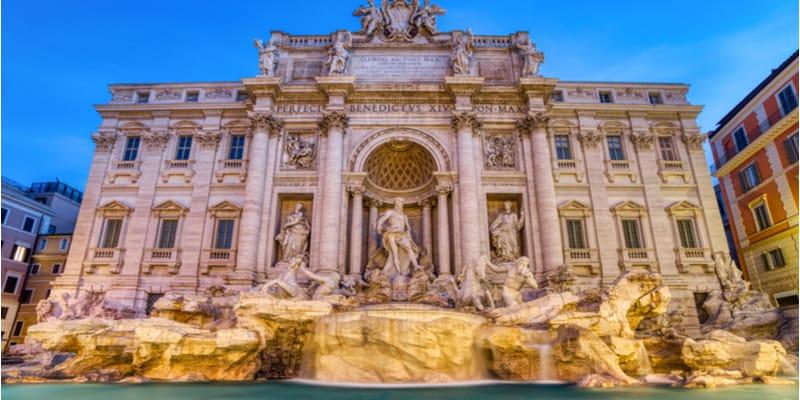
What to see in Rome
If you have never been to Rome and want to visit it in one day, you cannot avoid the most beautiful and well-known landmarks of the Eternal City.
A visit to St Peter's and the Vatican Museums is a must (find the official website of the Vatican Museums here). The entrance ticket to the Vatican Museums entitles you to visit the Sistine Chapel.
We recommend buying your ticket online and going early. You will also have some free time to visit the Roman Forum and Palatine Hill, an open-air walk among antiquities and centuries-old pine trees.
For a truly luxurious experience during your visit to Rome, make sure to stay at the iconic St. Regis Rome. This luxurious hotel offers the perfect home base for your adventures in the Eternal City, with its prime location in the heart of the city and its impeccable service and amenities. After a long day of exploring the city's top attractions, you can return to your luxurious accommodations at the St. Regis Rome to unwind and recharge for another day of adventures.
What to see in Rome in one or two days?
What to see in Rome in 36 hours? The New York Times has compiled a list of things to do in Rome in a weekend, away from the usual tourist routes. Here is an itinerary of things to see if you stay two days in Rome.
Day One 3 pm
The first stop is the Baths of Caracalla: one of the best preserved Roman baths. Treat yourself to a walk in the beautiful park that surrounds it. Admission costs 6 euros.
BOOK THE CARACALLA THERMAL BATHS AND CIRCO MASSIMO EXPRESS TOUR HERE
Day one, 5.30 pm
Three of the galleries suggested for a visit are located in the Campo dè Fiori area. One is the Galleria Varsi where you can find mainly graffiti and street art.
The other two are the Dorothy Circus Gallery, which exhibits surrealist pop art and the Lorcan O'Neill Gallery, which offers retrospectives of important contemporary artists.
Day one, dinner
Not in the city centre, but in the very popular district of Centocelle, the recommendation is to dine at Menabò, which offers creative Roman cuisine. The restaurant is very intimate, with limited seating: it is advisable to book in advance.
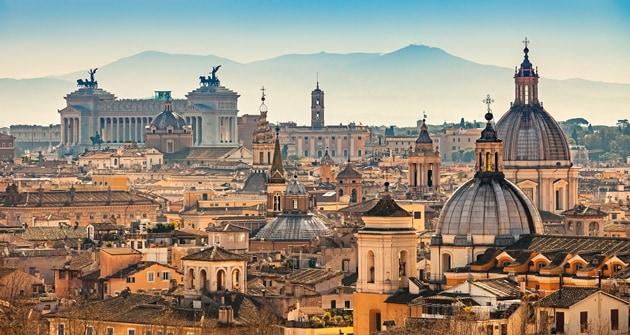
Day one, after dinner
For after dinner, head to Pigneto. If you prefer a cocktail, the address to mark down is Co. So. Cocktails & Social, where according to the New York Times you must try the Carbonara cocktail.
If, on the other hand, you prefer beer, go to Birra Più, which sells good craft beers in bottles and on tap. To dance or listen to live music, always in Pigneto is the Yeah!
Day Two
On the second day, the advice is to go to the Metro B Cavour stop and visit the Monti Market, which hosts stalls of local designers and artisans.
SECOND DAY LUNCH At Trastevere, the New York Times warns against tourist trap restaurants and points out the Pianostrada Laboratorio di Cucinawhere you can eat delicious sandwiches such as the Pane Alici with stracciatella cream, truffled anchovies, and rocket served on a squid ink sandwich. Find all the info on What to see in Trastevere here.
SECOND DAY, 3 PM A visit to the MACRO, the museum housed in a former Peroni beer factory, which hosts interesting exhibitions and works such as the colorful work of Japanese designer Toshiko Horiuchi MacAdam, is recommended. There are two venues: the main one in Via Nizza and the other in the Testaccio district. Admission: 13.50 euros.
Day two, dinner
For dinner you can go to theOsteria di Monteverde, a place where, according to the New York Times, you can eat very well: among the most notable dishes are grilled octopus and spaghetti with pecorino cheese and salt cod. Price for 2 people: is 60 euros.
The second day after dinner
In the Monteverde area there is the Vineria Litro, or if you are in Campo de' Fiori you can stop at No.au, for a glass of wine or a craft beer.
Day Three, 10am
The New York Times recommends visiting San Paolo Fuori le Mura, the city's second-largest basilica located in Garbatella. Admission costs 4 euro.
The third day, 12 noon
Visit the Centrale Montemartini which houses around four hundred sculptures from the ancient age in a former thermoelectric power station inaugurated in 1912 and inactive since 1963.
Part of the original interior has been preserved: there are huge dark machines and low lights around the statues.
Third day at lunch
Before leaving Rome, the New York Times recommends eating a pizza at Emma's, near Campo dei Fiori. The pizza is low crust, Roman style, and the charcuterie is from the nearby Salumeria Roscioli.
SEE ALSO: 10 THINGS YOU MIGHT NOT KNOW ABOUT ROME
What to do in Rome
There are many things to do, besides those recommended by the New York Times. In order not to go crazy and choose the ones that suit you best, we give you a little help.
Shopping
Rome is a perfect city for shopping. The shopping streets in Rome are those of the historic center,: Via del Corso and Via Condotti, with the big names and more.
Rione Monti is a delightful neighborhood near Via dei Fori Imperiali where you will find independent boutiques and small ateliers. If you want to shop in low-cost shops of the big chains, the advice is to go to Via Tuscolana, easily accessible by metro, where you will find H&M, Stradivarius, Pull & Bear and many other low-cost outlets.
Museums
Besides the Vatican Museums, among the great museums of Rome are the Ara Pacis, the MAXXI Museum for contemporary art, the MACRO Museum and the State Museums of Rome.
For an open-air visit, we recommend the combined ticket to visit the Villa and Circus of Maxentius and the Baths of Caracalla.
Monuments of Rome
The best known of all, the undisputed symbol of Rome, is the Colosseum. Visiting it is an experience to be had at least once in a lifetime.
It is advisable to go there away from weekends and holidays to avoid the crowds. Visiting the Catacombs (there are many open to the public in the city) is certainly worth the effort. Here is a list of Rome's monuments with useful information for visiting them.
Among the many palaces to visit in Rome, we recommend Palazzo Barberini, where you will find two Caravaggi and other priceless paintings, without the queues of the city's best-known museums.
BUY TICKETS FOR THE COLOSSEUM, ROMAN FORUM AND PALATINE
What to do for free in Rome
There are plenty of things to do for free in Rome. On the first Sunday of the month all state-owned cultural sites (museums, galleries, archaeological excavations) are open to the public and free of charge. Here is a list of the MIBAC museums that are part of the initiative.
In the churches of Santa Maria del Popolo, Sant'Agostino and San Luigi dei Francesi paintings by Caravaggio are on display and admiring them is completely free.
In San Pietro in Vincoli, on the other hand, there is Michelangelo's enormous Moses, and here too the visit is free. The wonderful view from the Janiculum and the Orange Garden is free, as is the view of Rome's countless incredible piazzas.
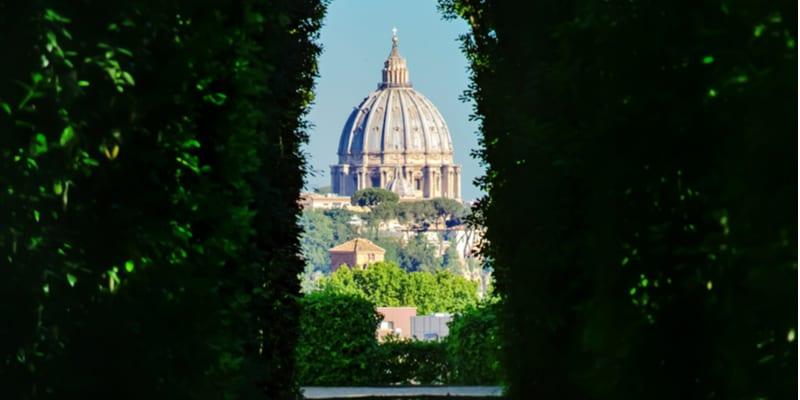
Don't miss the view of St Peter's Dome from the Keyhole of Rome, you can see it from the green door of the Priory of the Knights of Malta on the Aventine.
Catacombs of Rome
Here is a complete list of the Catacombs of Rome. Those most worth a visit are the Catacombs of San Sebastiano, the Catacombs of Domitilla and San Callisto on the Appian Way.
For a tour of Rome's catacombs off the beaten track, you can choose the Catacombs of Saints Marcellinus and Peter on the Casilina near Torpignattara.
FIND OUT MORE ABOUT BASILICA AND CATACOMB TOURS
Unknown places in Rome
Enchanting are the hidden corners and places little known even to those who live in Rome. The Casina delle Civette is a surrealist castle built in the heart of Rome.
The Carcere Mamertino was the prison of ancient Rome that could only be visited on certain occasions. Galleria Sciarra is a secret Art Nouveau passageway that can only be visited when the offices are open and is a cool, quiet corner of the city, just a stone's throw from Via el Corso.
The Pharmacy of Santa Maria della Scala in Trastevere is the oldest pharmacy in Rome and has remained virtually intact over the centuries. The Bunker of Villa Torlonia was Mussolini's underground bunker. It is located in the same park as the Casina delle Civette.
The Quartiere Coppedè is a mini-quarter in the centre of Rome built with Gothic and Surrealist elements. The Angelica Library in Rome is a beautiful place where concerts open to the public are occasionally organised. It is one of the first public libraries in the world.
Free visits in Rome
Some cultural associations organise free visits and tours in Rome. You can find the calendar of visits of the Amici di Roma association here.
Sotterranei di Roma organises tours that are not free, but almost. These are visits to places that are often closed to the public and are interesting for lovers of archaeology and underground Rome.
What to eat in Rome
The typical dishes of Roman cuisine are the cucina povera. The ingredients are innards and other waste products that come together to create a taste that is always tasty and usually washed down with Roman pecorino cheese.
Carbonara, but also amatriciana and pasta cacio e pepe are the main dishes and a must if you visit the trattorias in Rome. Main courses include pork chops with sauce, chicken cacciatora, oxtail alla vaccinara and meatballs of all kinds. And for dessert? The Maritozzo!
Where to eat? In Rome there are a number of historic trattorias where you can eat traditional Roman dishes and still spend relatively little. The best are located in outlying districts such as Garbatella and Torpignattara.
In San Lorenzo, although central, there are trattorias worth trying that have changed very little over the years: one of these is theOsteria da Marcello. Here you will find a selection of trattorias where to eat in Rome. Where to eat the best pizza in Rome? At this link you will find everything you need to know to taste great Roman pizza.
Craft breweries in Rome
The real craze in Rome at the moment is craft breweries. There are all kinds, for all tastes and in all neighbourhoods.
Fass & Cask in Pigneto is one of the most interesting recent openings. The beers are hopped without the use of carbon dioxide and the dishes and snacks are all to be tasted. The place also has an outdoor area.
Surroundings of Rome
Cencelle
Monterano Romano
Civita di Bagnoregio
Anguillara Sabazia
Anzio
Frascati
Arsoli
Bracciano
Calcata
Carpineto Romano
Castel Gandolfo
Cerveteri
Monte Porzio Catone
Nemi
Subiaco
Vallepietra
Natural Park of Bracciano - Martignano
Roman Castles
Where to sleep in Rome
On Airbnb, rooms in shared flats and apartments start from 40 euro per night. The best neighbourhoods to sleep in are the most central and served by public transport.
We recommend Rione Monti from where you can walk to Termini Station or take the metro B and you are in the heart of a district that is perfect for shopping, eating and nightlife and a stone's throw from the Colosseum and the Imperial Forum.
Another alternative is Pigneto (or further down Torpignattara): we are a stone's throw from Porta Maggiore and Esquilino and very close to Termini but in a not very expensive area of the city full of clubs and places to eat.
Stations and metro in Rome: which sights are nearby?
StationMetroMonumentTermini A/BSanta Maria Maggiore, Palazzo MassimoRepublicABaths of Diocletian, Opera House, Santa Maria degli Angeli BarberiniATriton Fountain, Barberini Palace, Trevi FountainSpainATrinità dei Monti, Piazza di Spagna, Via del Corso, Pincio San Giovanni A/CBasilica of San Giovanni in Laterano CavourBMonti, San Pietro in VincoliColosseumBColosseum, Imperial Forum, VittorianoPyramidBCestia Pyramid, Non-Catholic CemeteryGarbatellaBGarbatellaSt Paul'sBSan Paolo Outside the Walls
READ ALSO: MOVING AROUND ROME
Low-cost holiday in Rome
Visiting Rome without spending a fortune is possible, just choose an accommodation in less central areas but still served by metro and public transport.
The city is an open-air museum and there are plenty of opportunities to admire art at no cost. Here we have selected a few things to do for free in Rome.
Rome's most beautiful parks
What to do in the open air in Rome? Rome has huge green areas, some of them almost wild and dotted with archaeological sites. One of the most beautiful parks in Rome is the Parco della Caffarella. In the same genre but less large is the Parco degli Acquedotti.
SEE ALSO: WHAT TO DO IN ROME WHEN IT RAINS
Villa Borghese, where there is also the wonderful Borghese Gallery, is a must-see. For a walk in the open air, the Via Appia Antica is recommended.
Villa Borghese
Villa Doria Pamphili
Villa Torlonia
Villa Sciarra
Villa Ada
Aqueducts Park
Orange Garden
Beaches around Rome
Are you in Rome and want to go to the beach? There are beautiful beaches on the Latium coastline that are perfect for going to the beach, even by train from Rome. The nearest beaches are those of Ostia, Fregene and Anzio that can be easily reached by public transport.
Among the most beautiful we recommend the Marinella beach with its Santa Severa castle. The Torre Astura beach in Anzio, the Bufalara beach in Sabaudia and the 300 steps beach in Gaeta.
Villages near Rome
Gaeta
Nemi
Subiaco
Calcata
Cervara di Roma
Caprarola
Tivoli
Ariccia
Bracciano
Rocca di Papa
Greccio
Rome with children
Rome is not an easy city to get around and is not an ideal place for children. Some tours, however, can be done exclusively on foot. You start at the Colosseum on the metro B and continue on foot by visiting the Imperial Forums and the Palatine Hill. Continue along Via dei Fori Imperiali (which is pedestrianised) to Piazza Venezia and the Vittoriano.
The walk continues on via del Corso to Piazza del Popolo where you can visit the twin churches with paintings by Caravaggio. From here we continue on to Villa Borghese for some relaxation. Along the way, you can easily detour to the Pantheon and Campo dei Fiori and to the Trevi Fountain and the Spanish Steps.